
Pip: If you are a student picking a career right now, you are essentially choosing a costume for a party that has not been planned yet, in a venue that does not exist, with a dress code written in a language still being invented.
Mara: CareerSandhi has been mapping exactly that territory — what the job market looks like by 2035, and which skills will still matter when we get there. Let's start with the careers and capabilities that are actually emerging.
Emerging roles for a workforce that does not exist yet
Pip: The core tension here is that most students are preparing for jobs defined by today's economy, while the economy is busy rewriting its own job descriptions in real time.
Mara: The post frames it directly: "Many jobs that students currently prepare for may become heavily automated. At the same time, entirely new professions will emerge, creating opportunities for those who understand where the world is heading."
Pip: So the risk is not just picking the wrong career — it is preparing well for a role that quietly transforms into something unrecognizable by the time you arrive.
Mara: Right, and the post illustrates that concretely. A doctor in 2035 may rely on predictive AI tools that detect disease years before symptoms appear. A teacher may become a learning experience designer rather than a classroom lecturer. The job title survives; the actual work shifts substantially.
Pip: Which is either exciting or terrifying depending on how attached you are to your current study plan.
Mara: The first post maps six roles in detail — AI Systems Architect, Human-AI Collaboration Specialist, Climate Change Adaptation Consultant, Renewable Energy Systems Engineer, Biotechnology and Genetic Enhancement Specialist, and Space Industry Professional. What they share is that each one sits at the intersection of a technical field and a systemic real-world problem.
Mara: The Human-AI Collaboration Specialist role is a good example of that logic. The job is not to build AI — it is to design workflows where human judgment and machine intelligence divide the work sensibly, handling questions of empathy, ethics, and culture that algorithms cannot resolve alone.
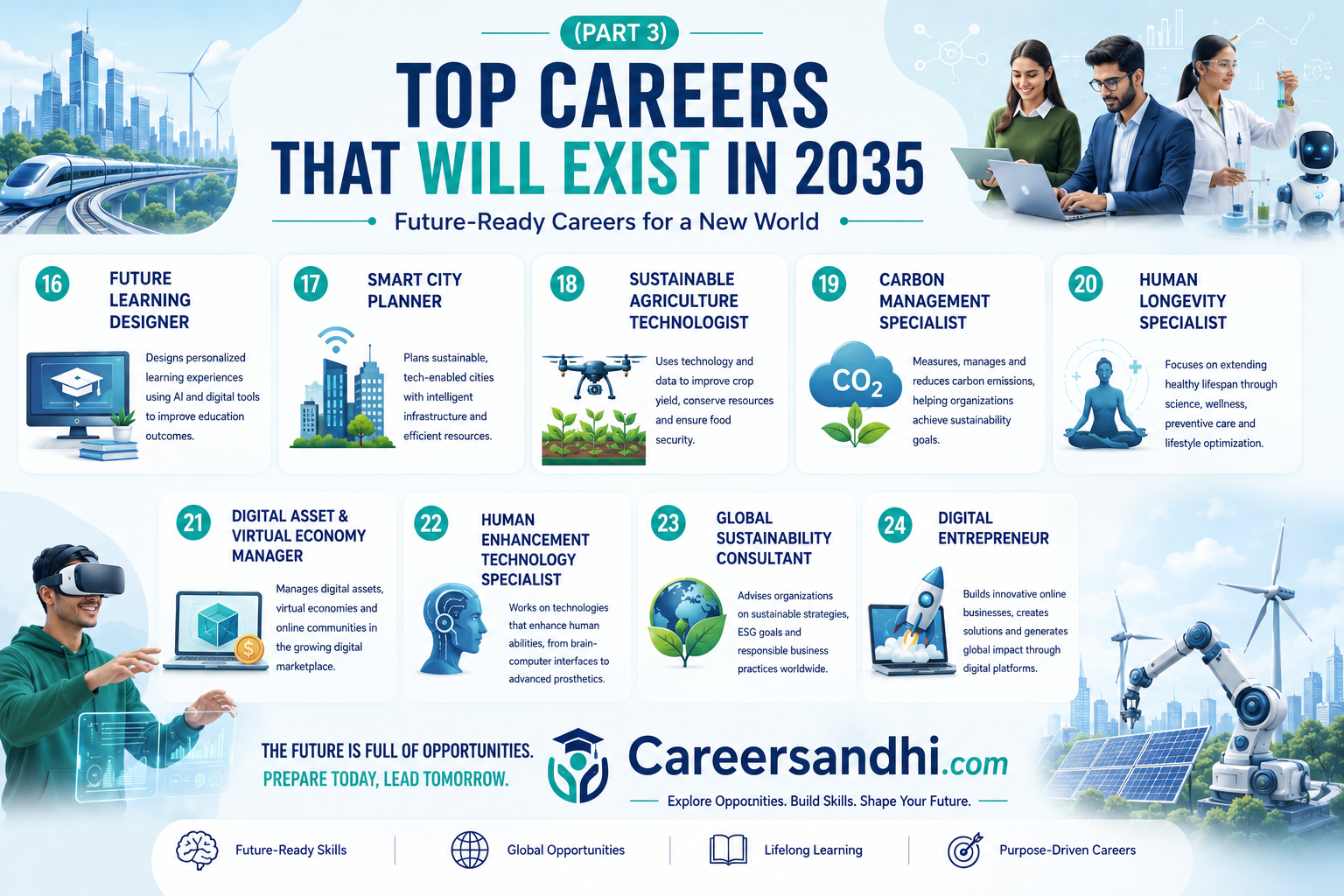
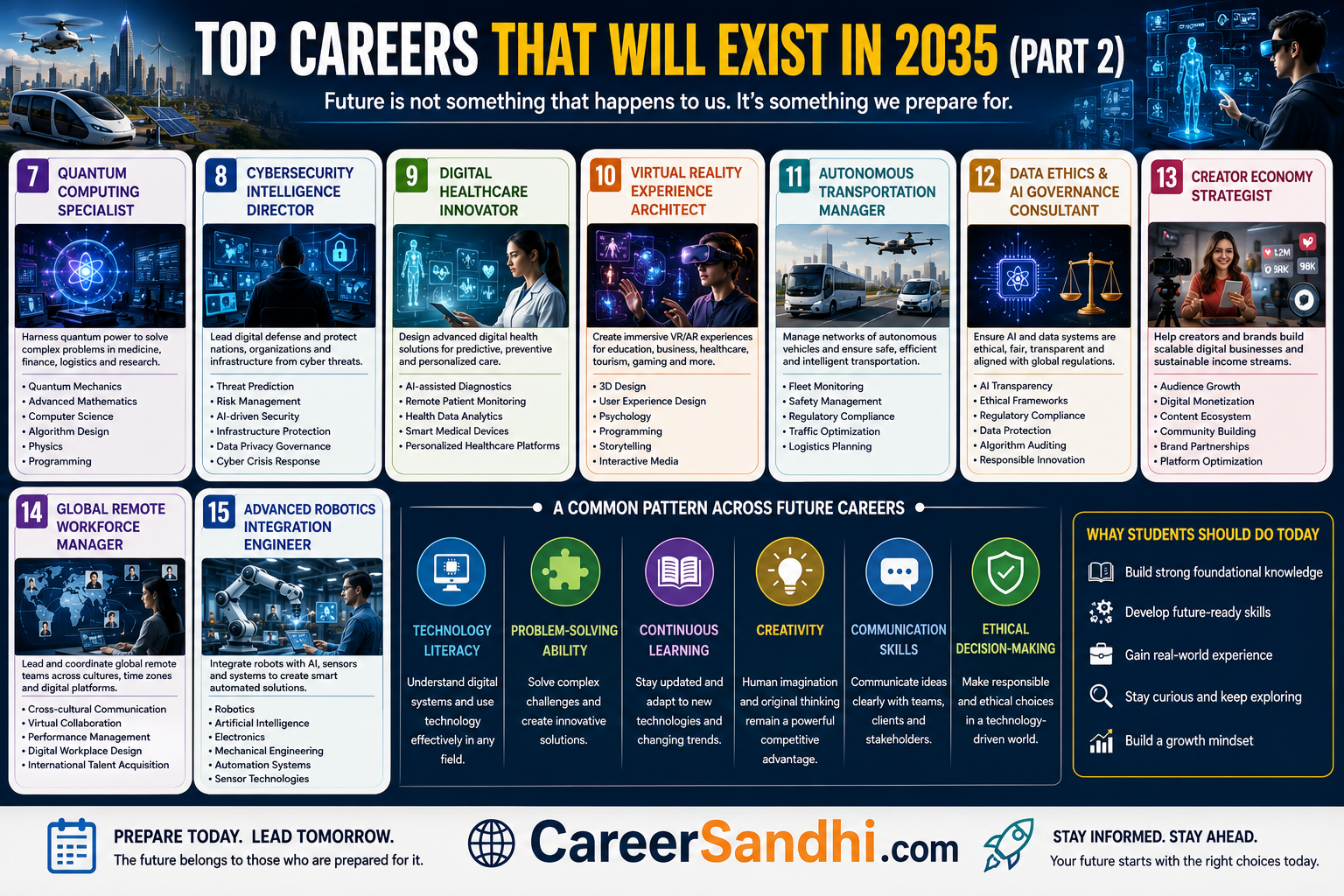
Pip: Part two extends the list considerably — Quantum Computing Specialist, Cybersecurity Intelligence Director, Digital Healthcare Innovator, Virtual Reality Experience Architect, Autonomous Transportation Manager, Data Ethics and AI Governance Consultant, Creator Economy Strategist, Global Remote Workforce Manager, and Advanced Robotics Integration Engineer.
Mara: And across all of them, the posts identify a common pattern: technology literacy, continuous learning, ethical decision-making, and the ability to communicate complex ideas clearly. These are not role-specific skills — they are the baseline the future workforce will be expected to walk in with.
Pip: The throughline is that automation is not erasing human expertise so much as relocating where it needs to be applied — which means the students with the clearest map of that shift are the ones who show up ready.
Mara: That map is still being drawn — and the next installment is already promised.
Pip: The honest summary is that the future job market rewards people who treat learning as a permanent condition rather than a phase you complete before employment.
Mara: Which means the most useful thing a student can do right now is stay curious about where the problems are — because that is where the roles will be.

Leave a Reply